Ultimate Guide to Sand Free Beach Towels
If you’ve decided a sand free beach towel makes sense for you, the next question is simple: how do you choose a good one?
Sand free towels can differ considerably in size, fabric weight, construction and feel. The right choice depends less on marketing claims and more on how you plan to use the towel.
This guide covers the practical things worth considering before you buy.
What Should You Look for in a Sand Free Beach Towel?
A good sand free towel should balance four things: effective sand release, absorbency, drying time and comfort.
It should also be durable enough for repeated exposure to saltwater, sunscreen, washing and everyday outdoor use.
Choose the Right Size
Size is one of the most important considerations because a larger towel gives you more room to lie on or wrap around yourself, while a smaller towel is lighter and easier to carry.
Standard Size
A standard beach towel is usually the most versatile choice. It provides enough coverage for drying off and everyday beach use without taking up unnecessary space in your bag.
Wovii’s Standard towel measures 140 × 70 cm and weighs approximately 390 g, making it particularly useful when portability matters.
Jumbo Size
If you prefer more room for lounging, wrapping up after swimming or simply want greater coverage, an oversized towel or bath sheet may suit you better.
Wovii’s Jumbo measures 170 × 95 cm. It provides substantially more surface area while retaining the compact and quick-drying characteristics of microfibre.
You can compare both options in the Wovii sand free beach towel collection.
Consider the Fabric Construction
Not all microfibre towels are made the same way.
For beach use, the construction needs to provide a smooth, tightly woven surface that makes it difficult for sand to become trapped while still absorbing moisture effectively.
Wovii towels use 400 GSM microfibre made from an 80% polyester and 20% polyamide blend. The result is a more substantial towel than very thin travel-style microfibre while remaining significantly lighter and more compact than traditional cotton.
If you want to understand the fabric in more detail, our guide to what makes microfibre towels unique explains how the material behaves.
Think About How the Towel Feels
Microfibre does not feel exactly like traditional terry cotton, and that is worth understanding before you buy.
A sand free towel has a smoother surface rather than the deep loops associated with a fluffy cotton towel. That difference in construction is part of what makes sand easier to remove.
Fabric weight also influences the feel. Extremely thin microfibre may be convenient to pack but can feel quite different from a more substantial towel.
Check That It Is Easy to Carry
A beach towel often spends almost as much time being carried as it does being used.
If you regularly walk to the beach, travel with limited luggage or carry towels for several people, weight and packed size become important considerations.
This is one of the practical advantages of microfibre: you can carry a generously sized towel without the bulk associated with an equivalent cotton towel.
Consider Drying Time
A towel that stays wet for hours can be inconvenient, particularly if you swim more than once or need to pack it away soon after use.
Microfibre dries relatively quickly because moisture can evaporate efficiently from its fine fibres and large surface area.
This becomes particularly useful on holidays, camping trips and consecutive beach days when you may not have somewhere convenient to leave a heavy wet towel hanging for hours.
Look for Durability and Easy Care
Beach towels have a fairly demanding life. They encounter saltwater, chlorine, sunscreen, sand and frequent washing.
Look for a towel designed for repeated use rather than choosing purely on appearance or how small it packs.
Washing according to the manufacturer’s instructions and avoiding fabric softener can also help maintain the performance of microfibre over time.
Choose a Towel That Suits More Than One Use
A useful beach towel does not have to spend the rest of its life waiting for summer.
Lightweight, quick-drying towels can also work well for swimming, camping, caravanning and holidays. If travel is a major part of how you intend to use yours, our travel towels section explains why the same characteristics become particularly useful away from home.
What About Colour?
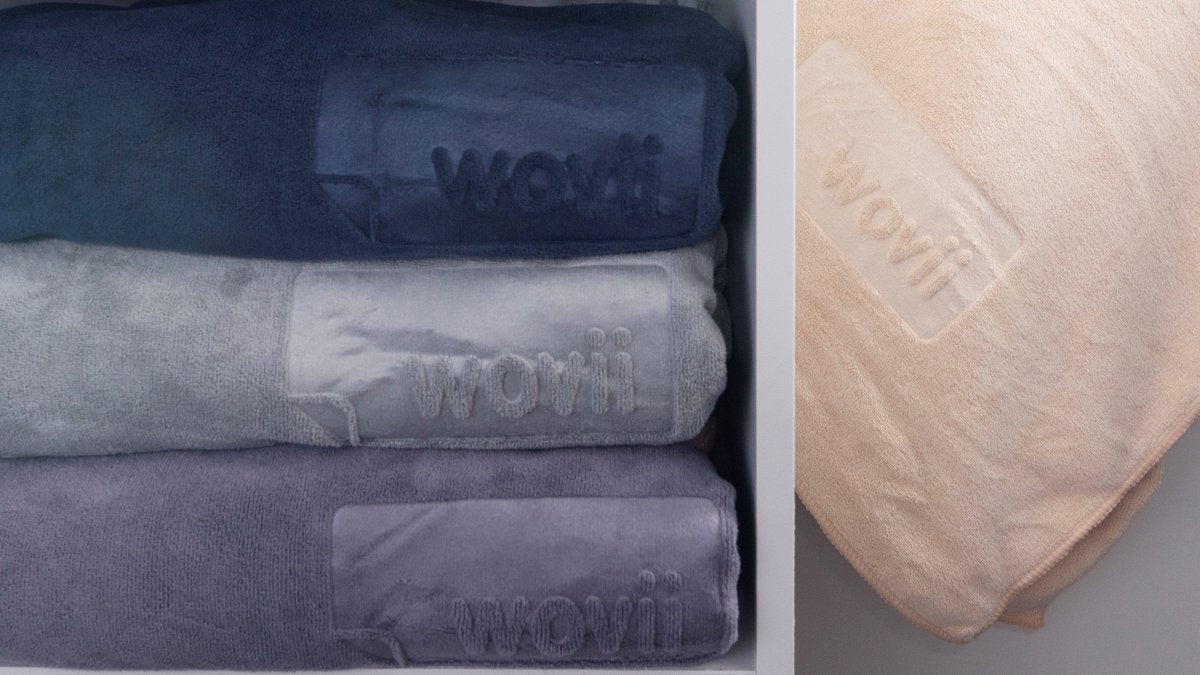
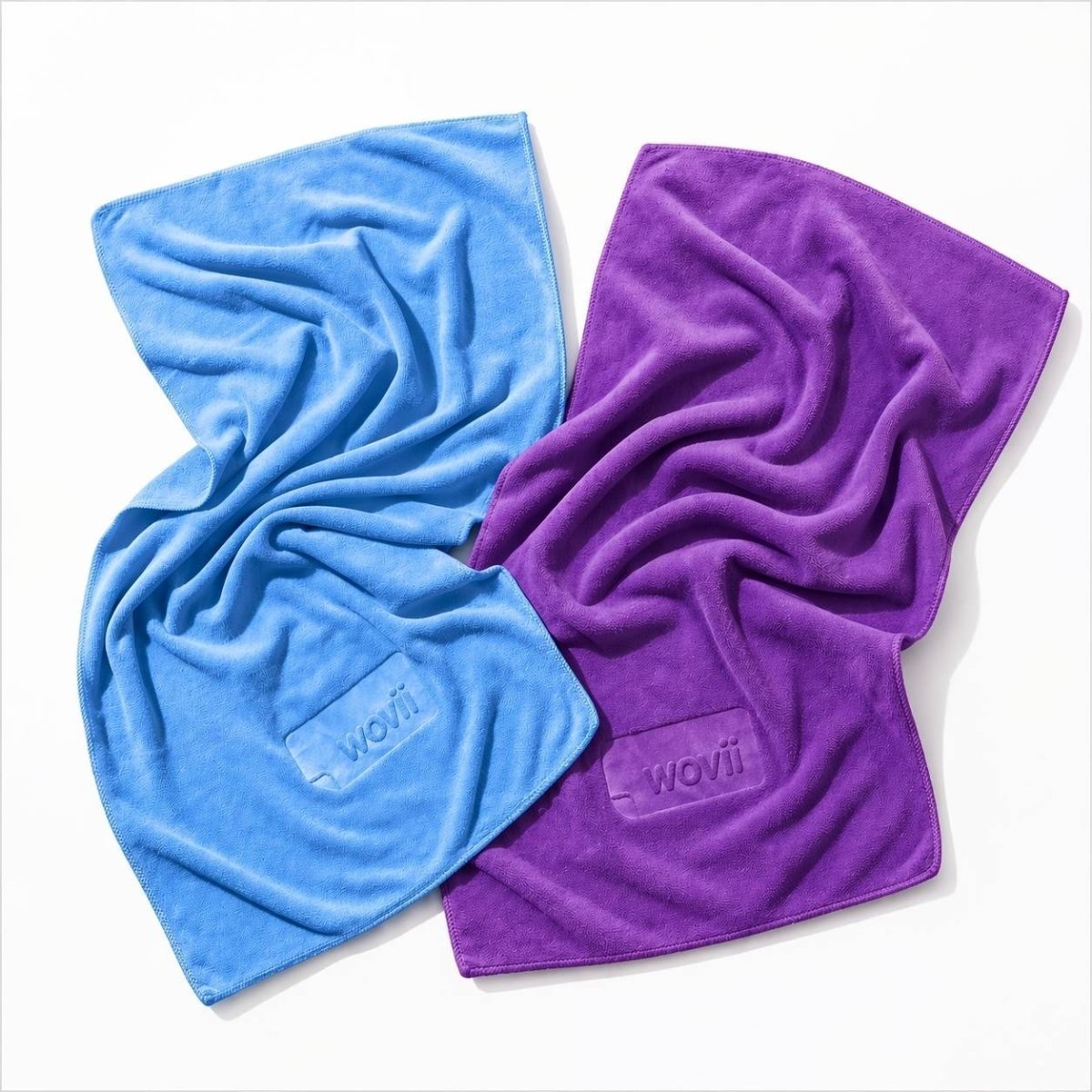
Colour is largely a personal choice, but there are practical considerations. A distinctive towel can be easier to recognise on a busy beach, particularly when several people are using similar-looking towels.
More importantly, choose a towel you actually like. A well-made beach towel should last for years, so there is little reason to settle for a colour you would rather leave in the cupboard.
How Do You Know Whether Sand Free Towels Really Work?
The term “sand free” can sound like a large promise. It does not mean that a wet towel will somehow repel every grain of sand that touches it.
The important difference is that sand is much less likely to become trapped in the smooth, tightly woven fabric and is therefore considerably easier to shake away once the towel is dry.
If you’re still deciding whether the technology itself is right for you, read Do Sand Free Towels Actually Work? for a more detailed explanation.
Choosing the Right Sand Free Beach Towel
There is no single best size or style for everyone. The right choice depends on what matters most to you.
- Choose a Standard size if portability and everyday versatility matter most.
- Choose a Jumbo if you want more room for lounging and wrapping up.
- Look for quality microfibre with enough substance to feel comfortable.
- Consider packed size and weight if you regularly carry your towel any distance.
- Choose something durable enough for repeated beach use and washing.
Once you know what you need, you can compare Wovii’s sand free beach towels and choose the size and colour that suits you.